Morocco’s Living Textiles
How Women Weave Time, Memory, and Identity Into Every Rug
From the small villages to big cities, inside homes and cooperatives all around the country of Morocco, weaving is not a hobby. It is a language, an archive, and often a woman’s most powerful way of rooting her legacy.
For generations, Amazigh women have sat at wooden looms pressed against mudbrick walls, turning wool into stories. The rugs the world now calls “Beni Ourain” or “Moroccan Berber rugs” are not just décor pieces. They are biographies. Journals that live on the floor.
When you step onto one, you are standing on someone’s life woven through colour.
Inside the Cooperative: Where Stories Hang From Every Wall
The first time I walked into a women’s weaving cooperative in Ait Zineb, the air smelled like lanolin and mint tea.
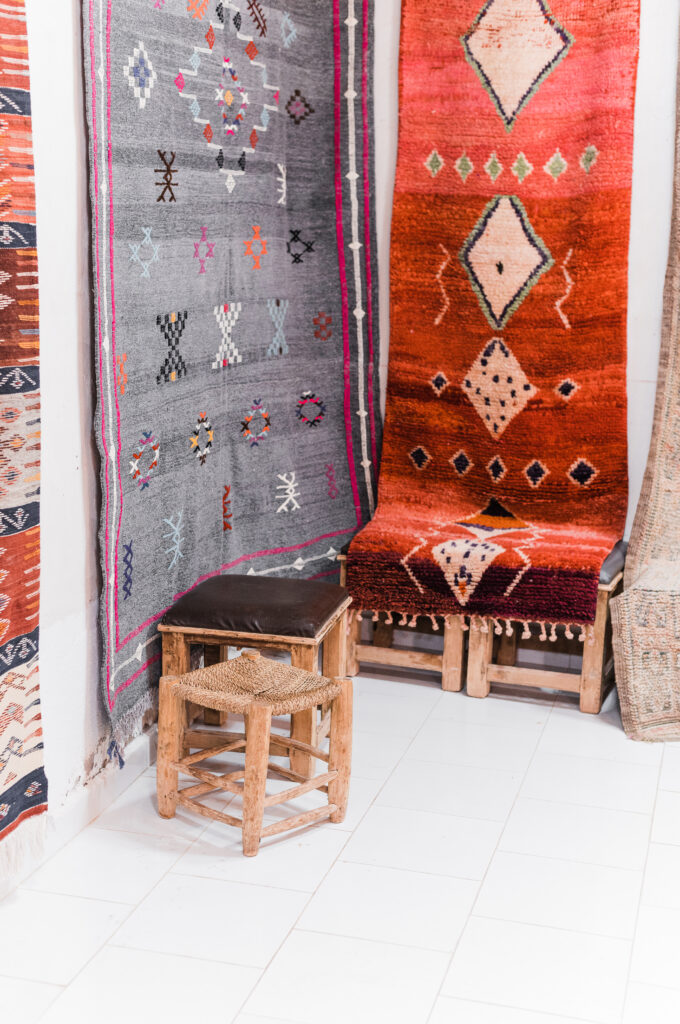
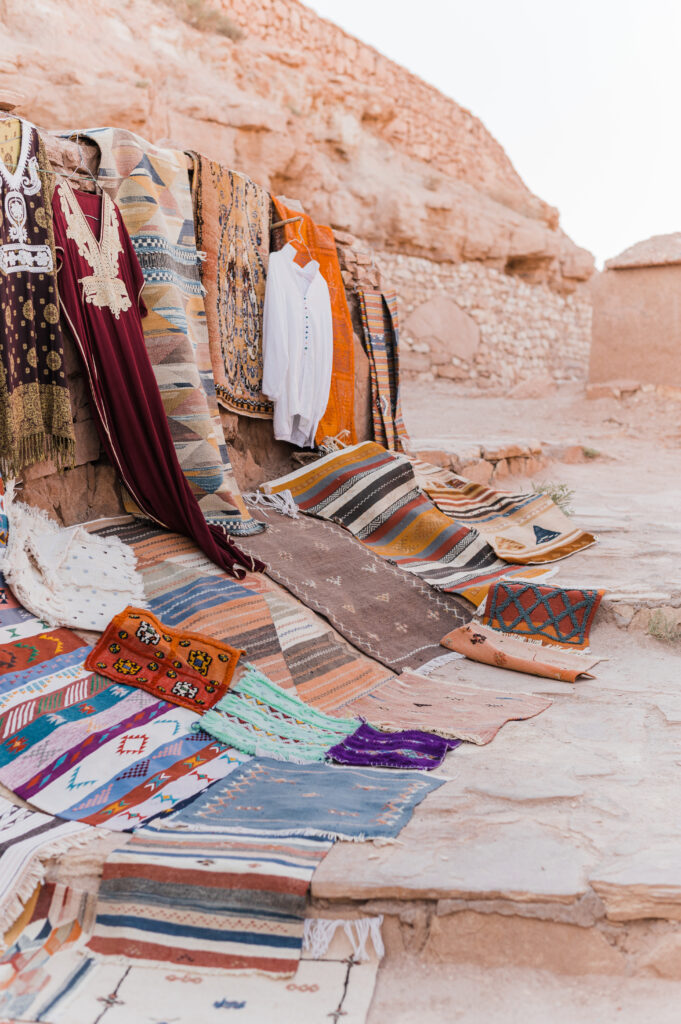
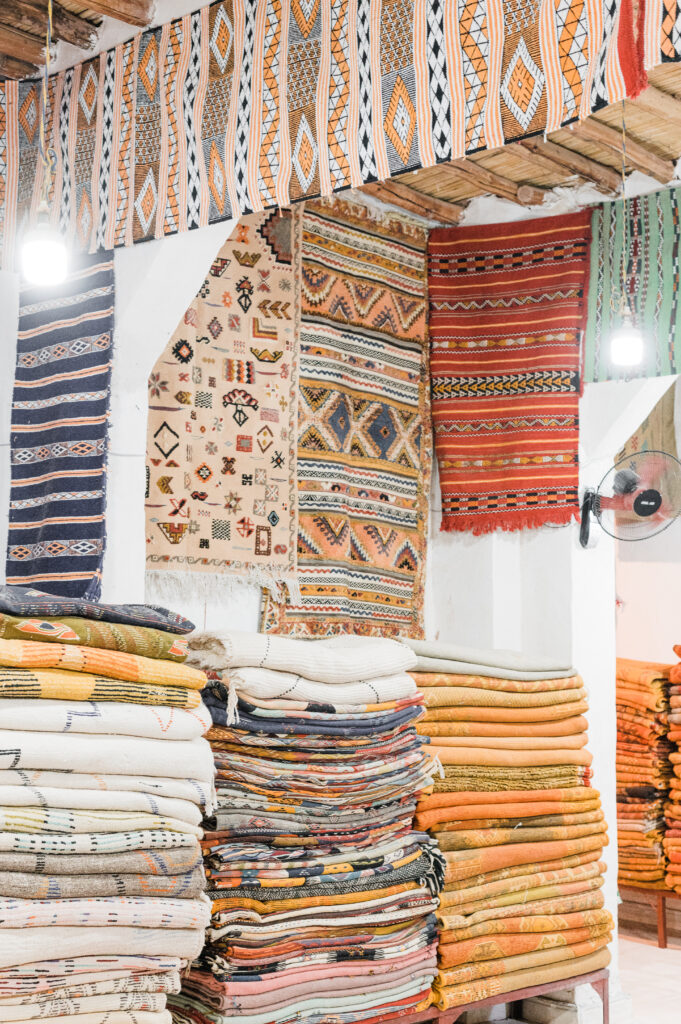
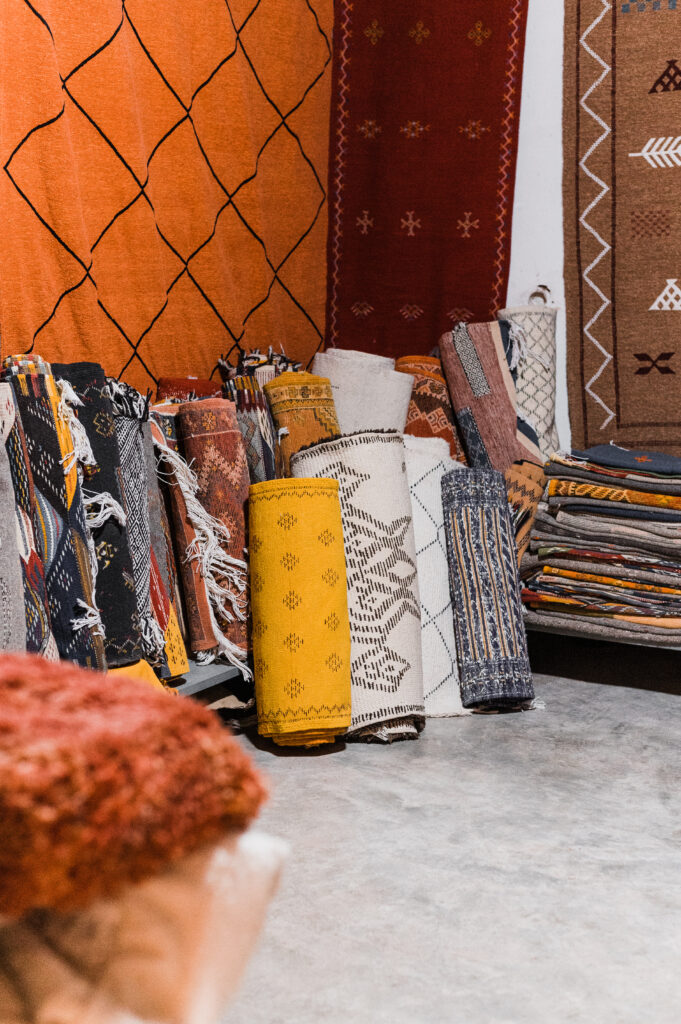
Outside, the earth was all ochres and reds, the late afternoon sun scorching. But inside the cool walls, colour exploded. Piles of wool, half spun, half tangled. Loops of yarn in saffron yellow, pomegranate red, deep indigo. Rugs folded high against the walls, so precariously stacked they were ready to fall over at the slightest touch. Each one, a different conversation.
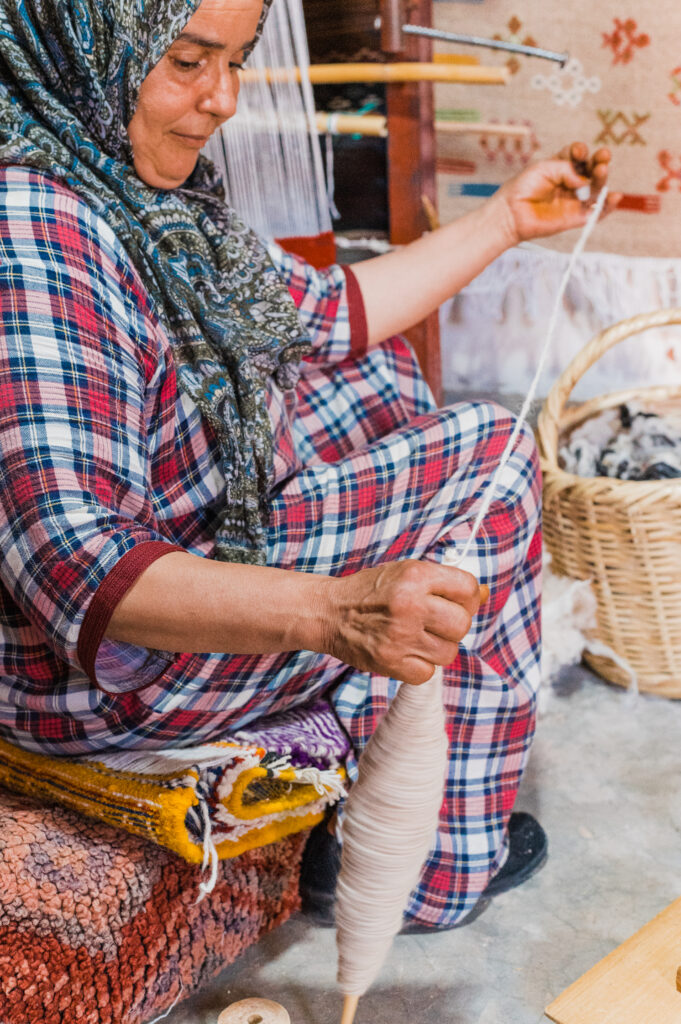
We were greeted by a group of women with quick smiles and steady hands. Weaving in Morocco is shaped by Amazigh women from many regions, each bringing their own symbols and stories to the loom. This cooperative is one of those places where that heritage comes alive. Here, women are keepers of tradition. They carry the stories, and they put them into cloth.
One younger woman noticed my camera and lit up. Without a word, she took my hand and began walking me through the cooperative like it was a gallery she curated herself. Every room, every loom, every rug had a story. She would tap a pattern, gesture to her chest, then sweep her hand out as if to say, this is mine.
I did not need a translation to understand.
From Sheep to Story: How a Rug Is Born
Before a single knot is tied, there is work that never makes it to Instagram.
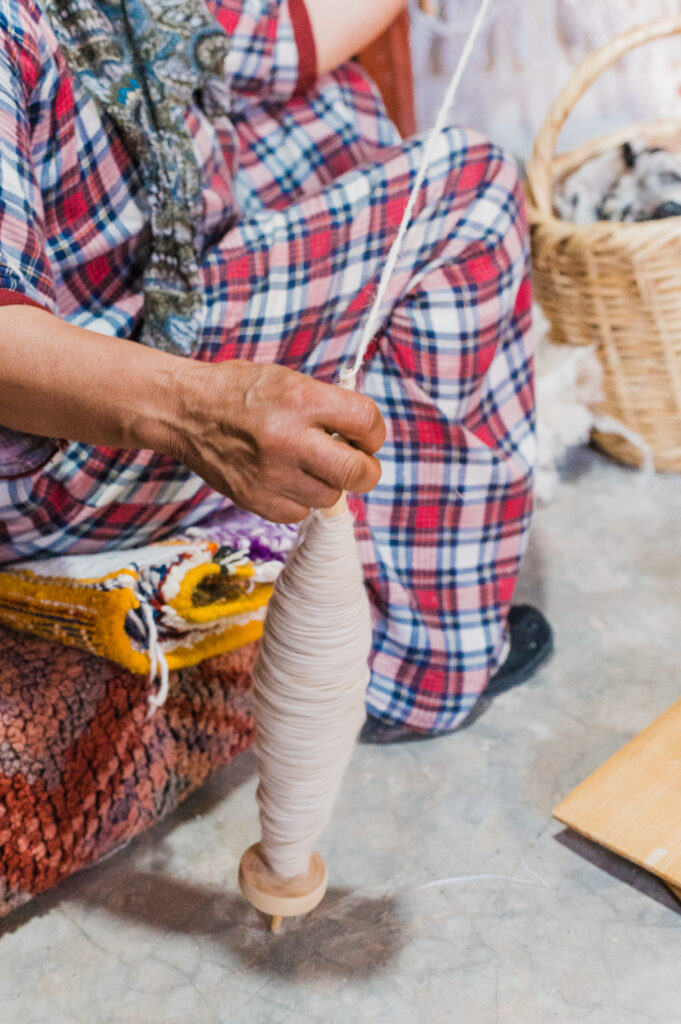
A rug begins as a sheep grazing on mountain slopes. The wool is shorn, washed, beaten clean. Women sit together, carding and spinning, talking over the soft whirr of fibre turning into thread.
Then comes colour.
In many cooperatives, synthetic dyes have crept in because they are cheap and quick. But in the traditional workshops, the palette is still drawn from the land itself:
- Madder root for deep reds
- Indigo and woad for rich blues
- Pomegranate skins for inky browns and blacks
- Saffron and almond leaves for warm yellows
- Henna and local plants for earthy oranges and terracottas
Once the wool is dyed, it’s rinsed in cool water and gently squeezed, then hung to dry on beams or outdoor lines. As it dries, the colour settles and deepens, creating the slight variations that natural dyes are known for. Afterward, the fibres are softened by hand and wound into skeins.
Only after all this does the weaving begin.
The Loom as a Page, the Knots as Words
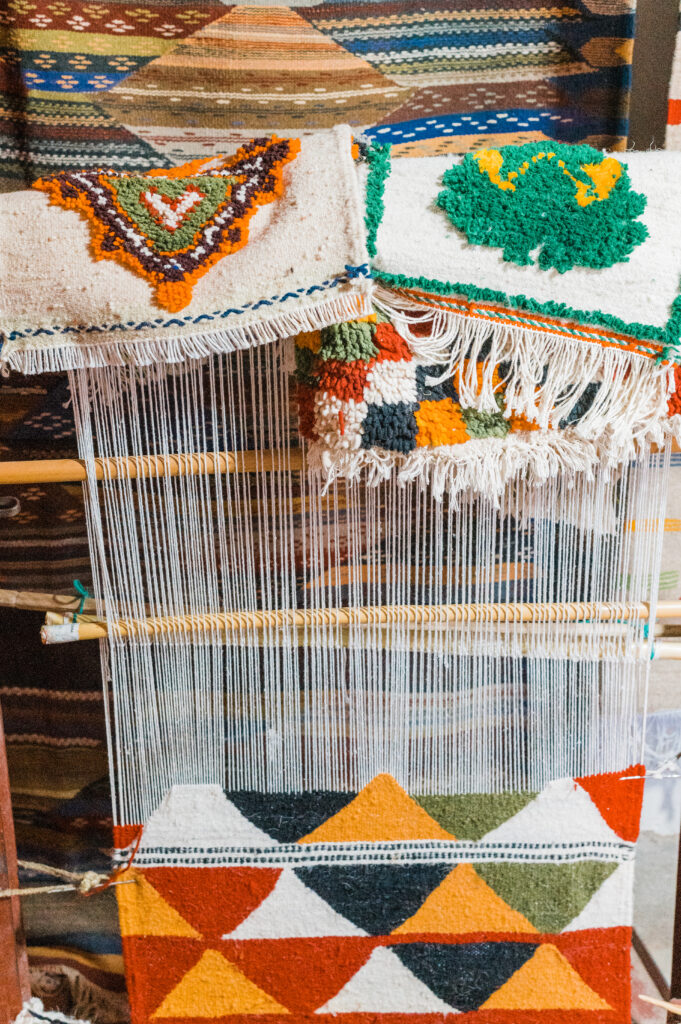
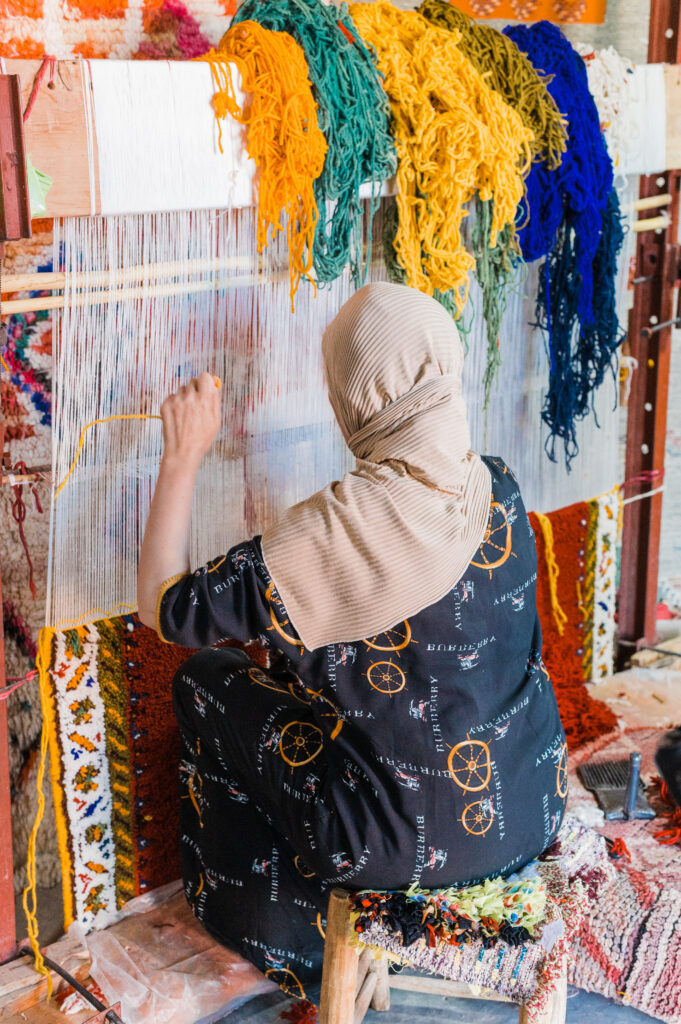
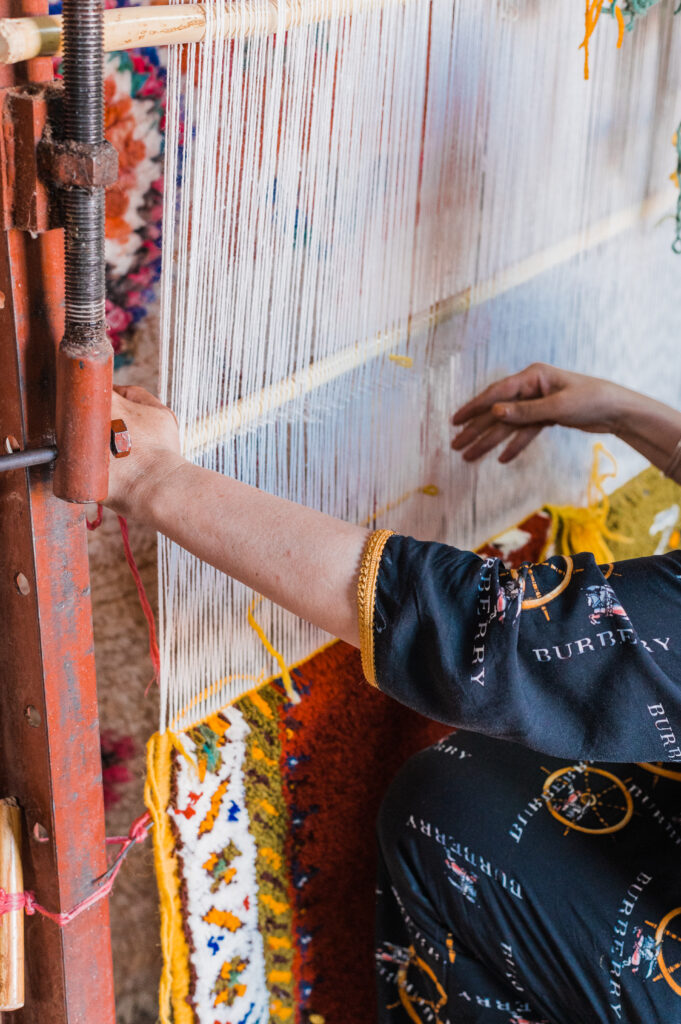
TThe loom stands upright, often taller than the woman working at it. Warp threads stretch vertically like the bones of a story waiting to be fleshed out.
Row by row, knot by knot, she builds the rug.
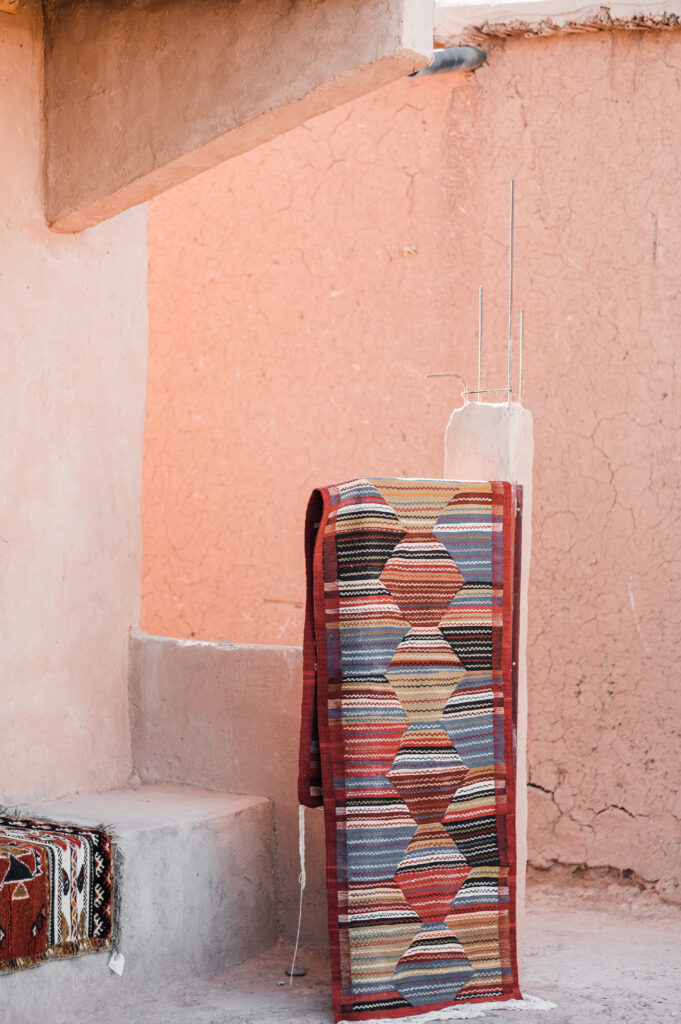
To an untrained eye, a Beni Ourain rug might look minimal: cream base, dark lines, a scattering of diamonds or symbols. In reality, those shapes hold entire worlds.
Common motifs can speak to:
- Protection: diamonds and crossed lines that watch over a home
- Fertility and family: repeated symbols that honour motherhood and children
- Journey: zigzags that echo mountain paths and life’s detours
- Resilience: broken lines that reconnect further down, a visual reminder that what bends does not always break
These patterns are not copied from a pinned design. They live in the weaver’s memory, often passed down from mother to daughter. She might improvise. She might repeat symbols that belong to her village or her family. She might weave her hopes for a child into a corner only she will recognize.
Making a rug isn’t a quick craft. It’s a long, communal labour of love. Depending on the size and complexity, the process can stretch from several months to nearly a year, often passing through the hands of multiple women who work together to bring it to life. Every knot, pattern, and colour choice affects the pace, and the more intricate the design, the longer the journey from raw wool to finished piece.
In some Amazigh communities, there is a saying that a woman who makes forty rugs in her lifetime is guaranteed a place in heaven. It is not about the number. It is about devotion. About how much of her life she has quite literally woven into the world.
Why Cooperatives Matter: Beyond Souvenir Shopping
NNot every rug seller in Morocco is part of a cooperative. Many are middlemen, many are resellers, many are simply business owners trying to make a living in a tourist economy.
Women’s cooperatives are different.
In the best cases, they are:
- Owned and run by local women
- Transparent about pricing and profit sharing
- Focused on fair wages and consistent orders
- Spaces where skills, language, and financial literacy are passed on
When you buy directly from a cooperative that pays its weavers fairly, you are not just decorating a room. You are contributing to:
- school fees for children
- healthcare and essentials
- the ability for women to remain in their villages instead of having to move to cities for precarious work
- the survival of motifs and techniques that might otherwise disappear under fast-production copies
- The legacy of a craft passed on from generation to generation
In one cooperative, the owner told us plainly: a single large rug can support a family for months if it is sold fairly. Cut the price in half to bargain, and it is not a “deal.” It is food, medicine, or school supplies disappearing out of someone’s hands.
That does not mean you cannot negotiate in Morocco. Haggling is part of the culture. It simply means remembering there is a human on the other side of the rug. A woman who has spent three to twelve months turning her time and body into something you will own for a lifetime.
How We Tell This Story Matters
If you work in travel, interiors, ethical fashion, or destination marketing, you already know that audiences are asking harder questions:
Who made this?
Were they paid fairly?
Is this culture being respected or just aestheticized?
Moroccan rugs sit at the crossroads of all of that.
For brands and tourism partners, the difference between extractive storytelling and respectful storytelling is in the details:
- Do your campaigns name and centre the artisans, or just the “vibes”?
- Are you working with cooperatives, or only with middlemen in cities?
- When you photograph textiles, are you also photographing hands, faces, and the process?
- Are you framing these women as simplified narratives that erase their expertise, or as skilled entrepreneurs, artists, and culture bearers?
Thoughtful visual storytelling can honour the reality:
A rug is not just an “inspo piece” for a neutral living room. It is an object that carries language, history, belief, and labour.
Choosing a Rug, Choosing a Relationship
If you are a traveller, you might only ever buy one Moroccan rug in your life. If you are a brand or designer, you might source dozens.
Either way, you have a choice. You can buy something anonymous and cheap, knowing as little as possible about who made it.
Or you can pause. Ask questions. Step into the cooperative, sit down on the floor, accept the tea, listen. Learn the difference between a piece woven in three frantic weeks for a reseller, and a piece slowly, stubbornly built by a woman who still believes every knot carries weight.
You can pay a price that honours that difference.
My Takeaways
In the end, this is what has stayed with me most from Morocco’s rug cooperatives:
They’re the storytellers and heritage keepers of the country.
Somewhere in the mountains, a woman is standing at a loom. Her hands move automatically now. She has woven through births, deaths, drought years, football matches, gossip, laughter, bad news, good news, and long winters.
One day, a rug she makes will travel farther than she ever will. It will end up in a home where her name is never spoken.
But if you look closely at the lines and symbols, if you run your fingertips over the wool and feel the small irregularities, you can still read what she left for you.
Every rug is a story. The question is whether we are willing to treat it like one.