Montefrío is the kind of place that gets reduced to a single photograph. A hill dotted with small, picturesque homes. A church that looks like a fortress. Olive groves rolling out in every direction.
Most people see it from a viewpoint, take the photo, and leave.
But, Montefrío isn’t just a nice view. It’s a lived-in town that just happens to have one of the BEST views in the world.
If you’re visiting Granada and looking for a day-trip that feels slower, quieter, and more grounded than the usual tourist circuit, this is it.
You just have to do it right.
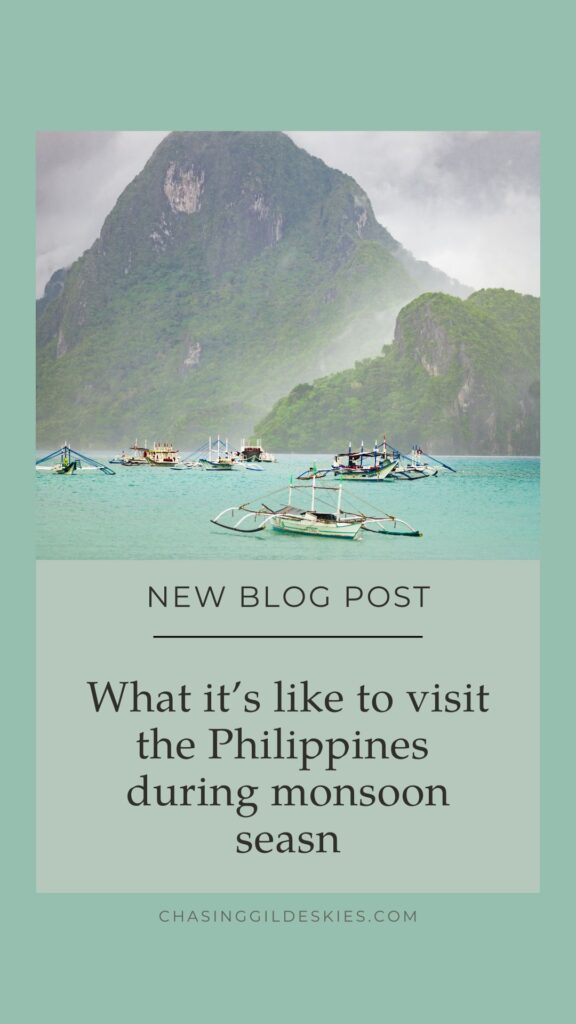
What Visiting the Philippines in Monsoon Season Actually Looks Like
I knew travelling to the Philippines during monsoon season was a gamble. Scratch that, I Did the most ignorant thing a well-travelled person could do: I didn’t look up the average weather during late august in a country I was visiting. Rookie mistake.
What I didn’t expect was how quickly the weather would change the entire rhythm of the trip. What did help me was staying in one place. I decided to make El nido my base camp and it was the right choice for me.
The version of the Philippines most people picture is bright, saturated, and effortless. Turquoise water. Sharp sunlight. Boat tours running perfectly on schedule. Everything looking exactly the way it does in travel content online.
Monsoon season strips some of that away. And honestly, I ended up loving that version more.
Not because the storms were easy or romantic, but because the experience stopped feeling curated. It felt real. Slower. Less performative. Like I was seeing a version of the country that exists beyond perfect-weather marketing.
That doesn’t mean monsoon season is ideal for anyone. Some days were frustrating. Plans changed constantly. Rain arrived hard and fast, sometimes strong enough to stop conversations entirely.
But it also forced me to travel differently.
What Actually Changes During Monsoon Season
The biggest misconception about monsoon season is that it rains constantly.
Sometimes it does. More often, the weather shifts rapidly throughout the day. Heavy downpours roll in, then disappear just as quickly, leaving behind thick humidity and dramatic skies.
But even when the rain passes, it changes everything else:
- Ferry schedules become less predictable
- Tours can be delayed or cancelled
- Roads flood
- Islands feel quieter
- People move more slowly
- You stop trying to cram five activities into one day
Travel becomes less about optimization and more about adaptation.
That was the biggest adjustment for me.
I’m used to planning trips tightly. Maximizing time. Trying to see everything. But the weather kept interrupting that mindset until eventually I stopped fighting it.
And once I did, the trip became far more interesting.
The Part Social Media Rarely Shows
The Philippines online often feels packaged around ideal conditions.
Monsoon season pulls the curtain back a little.
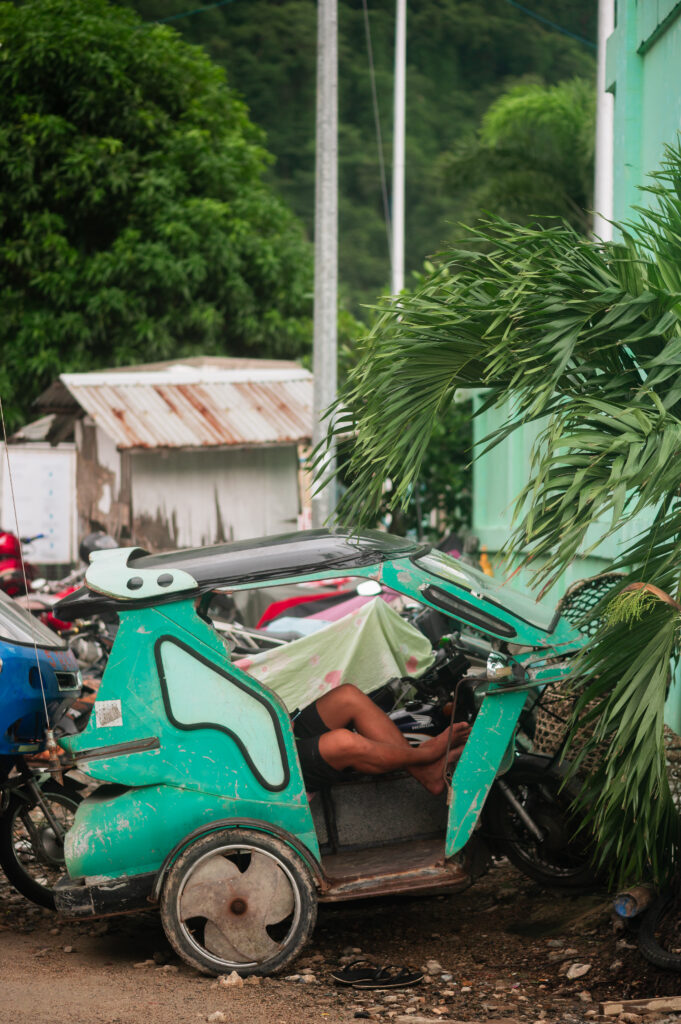
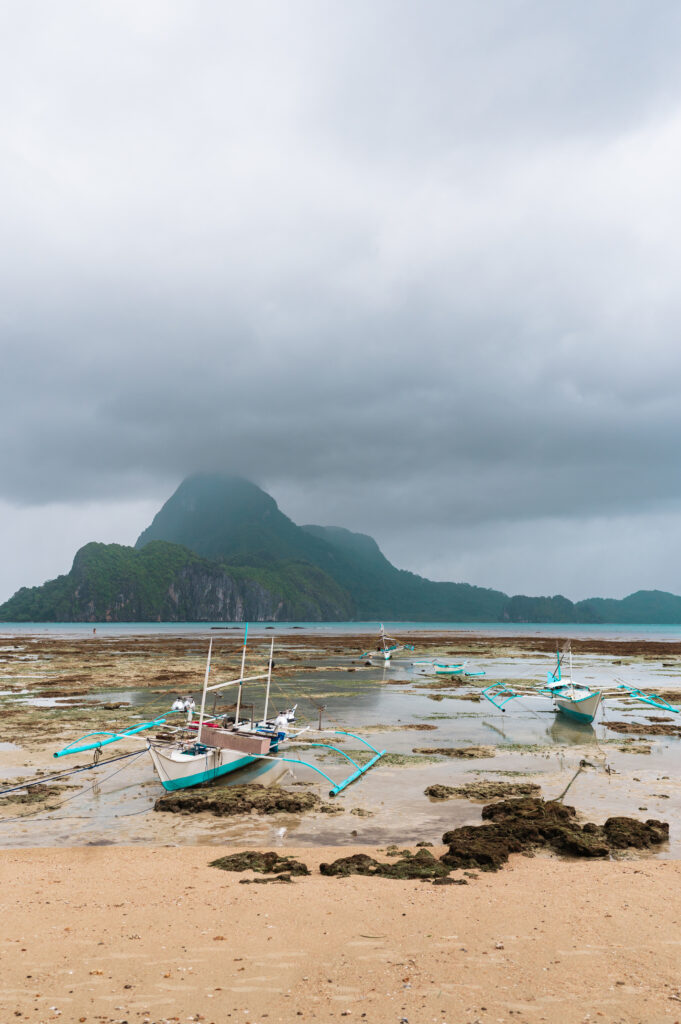
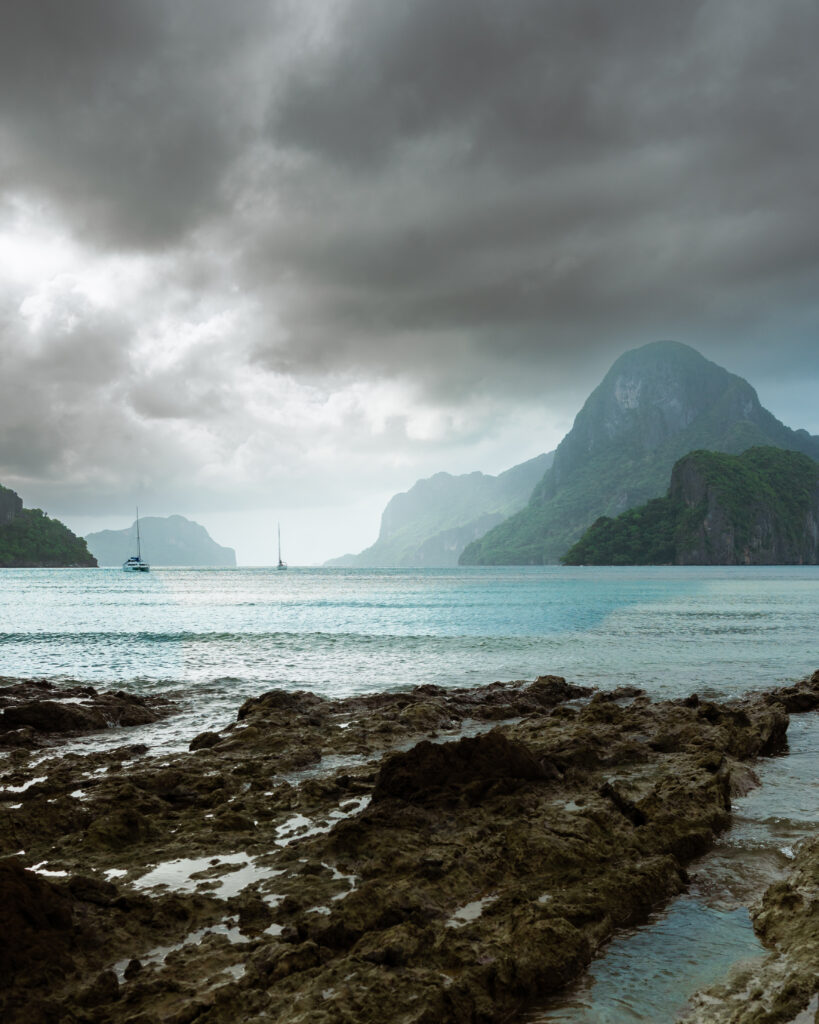
The beaches are still beautiful, but they aren’t always postcard-perfect. The skies turn grey. The ocean gets rough. Laundry hangs under covered porches instead of drying in the sun. Streets flood quickly. People continue their days around weather that tourists often treat as an inconvenience or disappointment.
As travellers, the rain is temporary for us. We get delayed ferries and muddy shoes. We get disappointed when yours are delayed or the views aren’t as spectacular as we wanted. Many locals experience monsoon season very differently through flooding, disrupted work, damaged homes, dangerous roads, and uncertainty around income.
And yet what stayed with me most was the warmth.
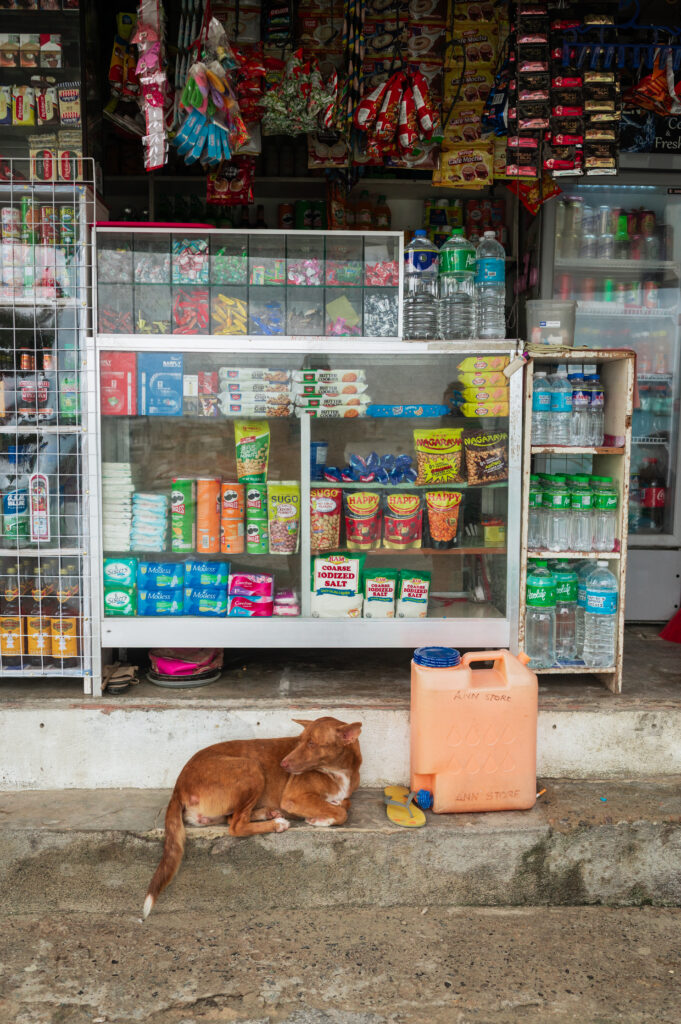
Even on difficult weather days, people were kind. Joking. Helpful. Patient when plans changed. Life didn’t stop every time the skies opened up.
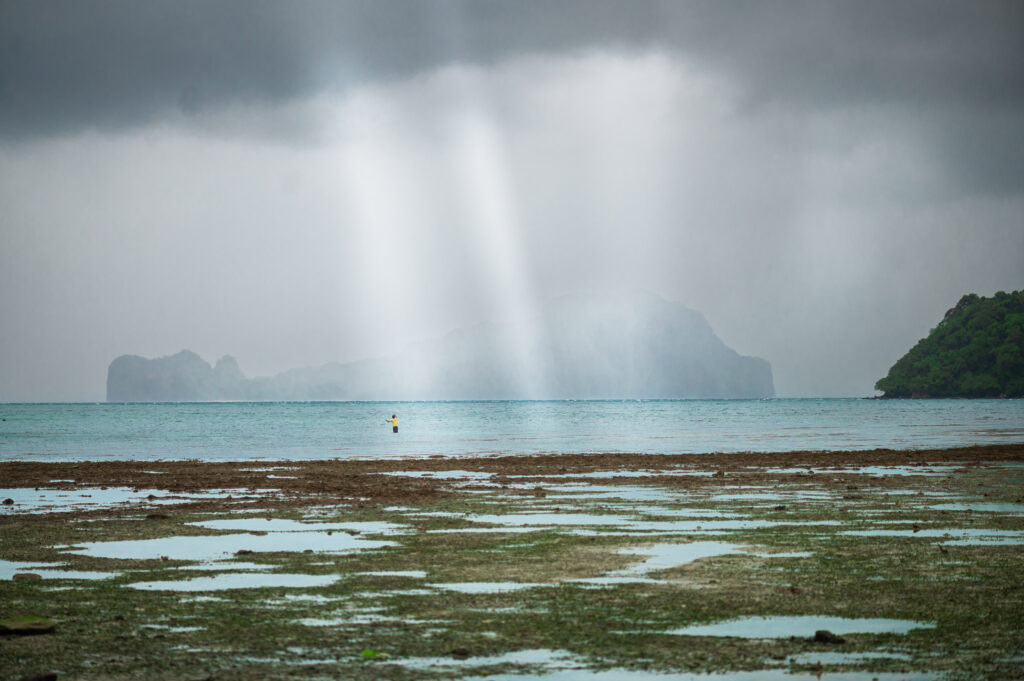
We watched fishermen continue through steady rain that would’ve sent most tourists running for cover. Work still needed to happen; mother nature wouldn’t stop them.
It shifted something for me.
Not in a dramatic “life lesson” kind of way. It simply reminded me how easy it is to experience weather as atmosphere when you aren’t the one living inside its consequences long term.
Why I Still Don’t Regret Going
If your goal is guaranteed sunshine and perfect conditions every day, monsoon season probably isn’t the best time to visit the Philippines.
But if you’re comfortable with flexibility, slower pacing, and the possibility that your trip might not look exactly how you imagined, there’s something incredibly rewarding about it.
The crowds thin out. Places feel quieter. Conversations last longer. You notice more. BArs are open long into the night to compensate for daytime rainfal.
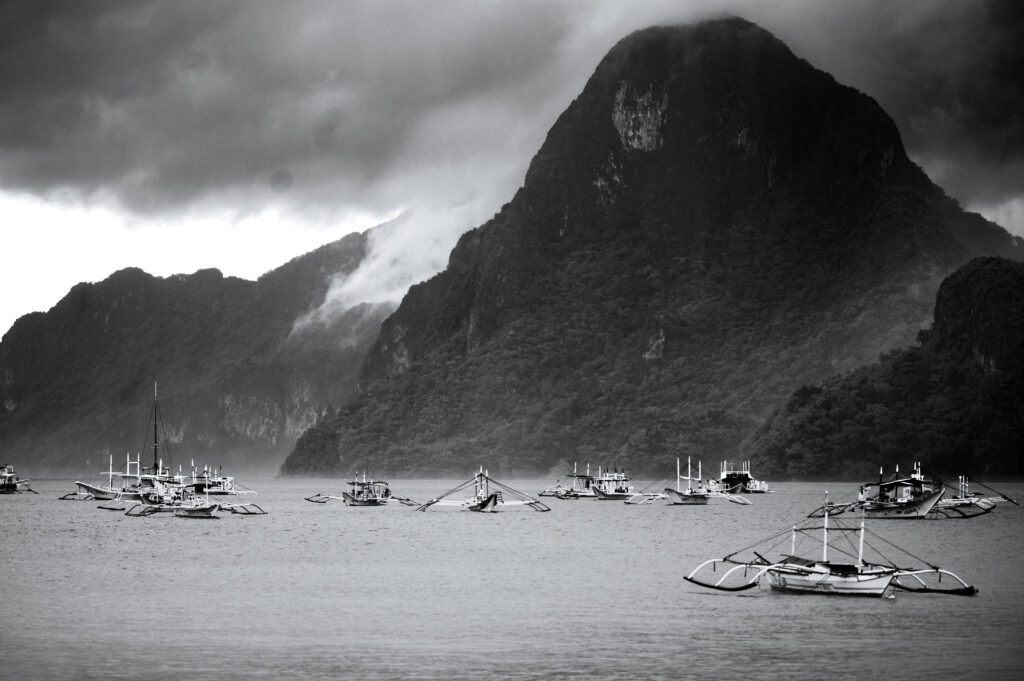
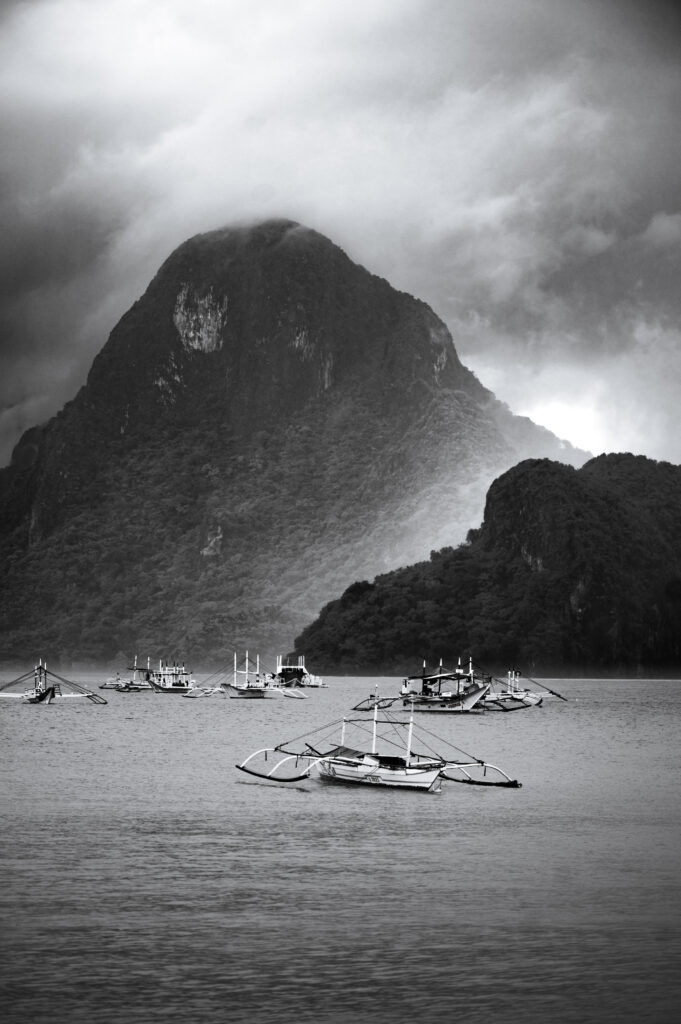
And from a photography perspective, I ended up with images I never would’ve captured on clear blue-sky days. Fog rolling over cliffs. Soft light instead of harsh contrast. Streets reflecting neon and headlights after heavy rain.
The trip stopped feeling like I was trying to recreate someone else’s itinerary and started feeling like my own experience.
Tips for Travelling the Philippines During Monsoon Season
If you’re considering visiting during rainy season, here’s what I’d genuinely recommend:
- Build flexibility into your itinerary
Do not schedule every connection tightly. Weather delays happen. - Prioritize fewer destinations
Moving between islands becomes more unpredictable during storms. - Bring proper waterproof protection
Not just for yourself, but for electronics, cameras, passports, and bags. - Expect plans to change
Some of my favourite moments happened because something else got cancelled. - Don’t expect “Instagram weather”
The beauty is still there. It just looks different.
Stay patient Weather impacts locals long before it impacts tourists.
Where to stay in El nido
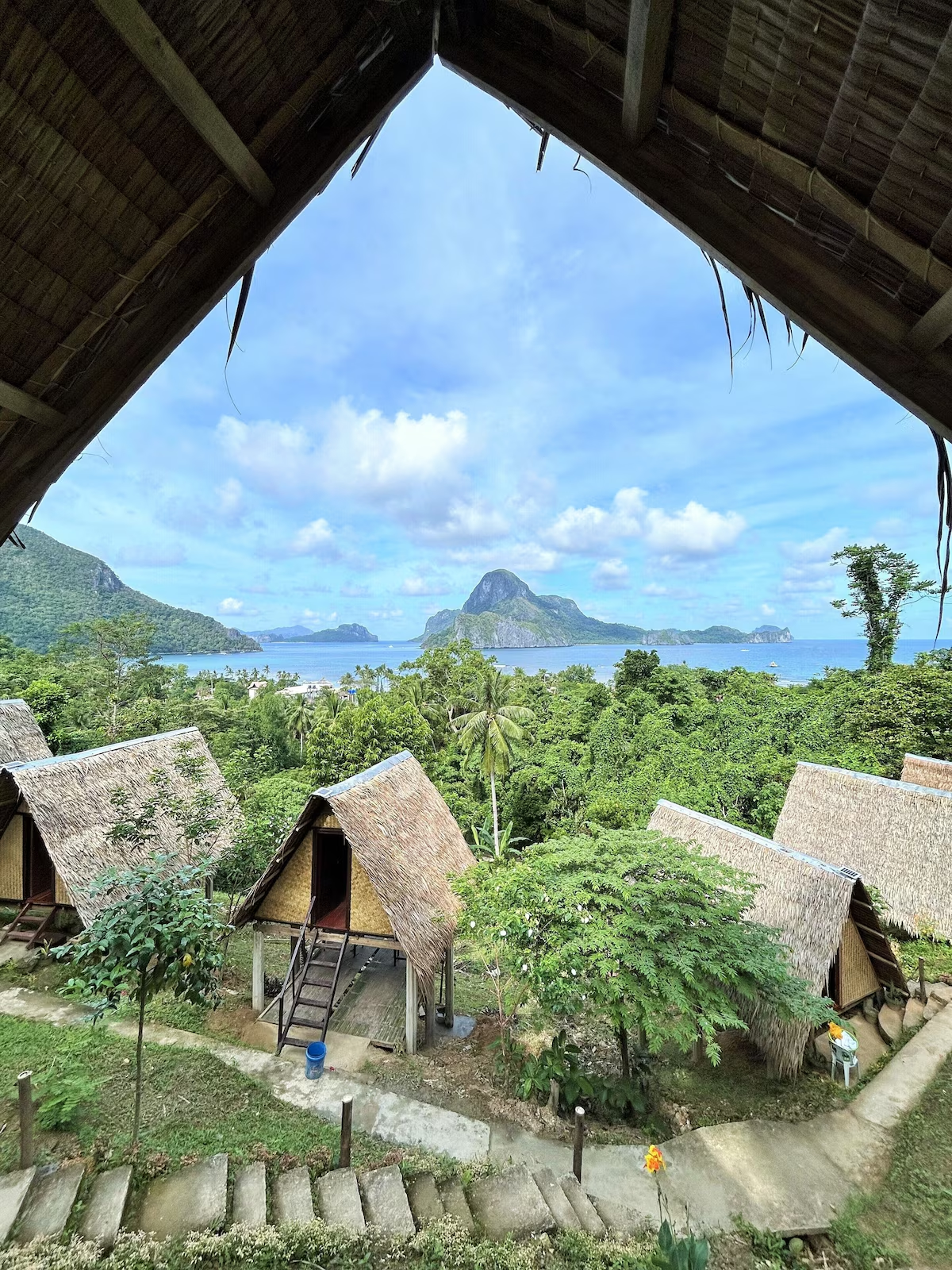
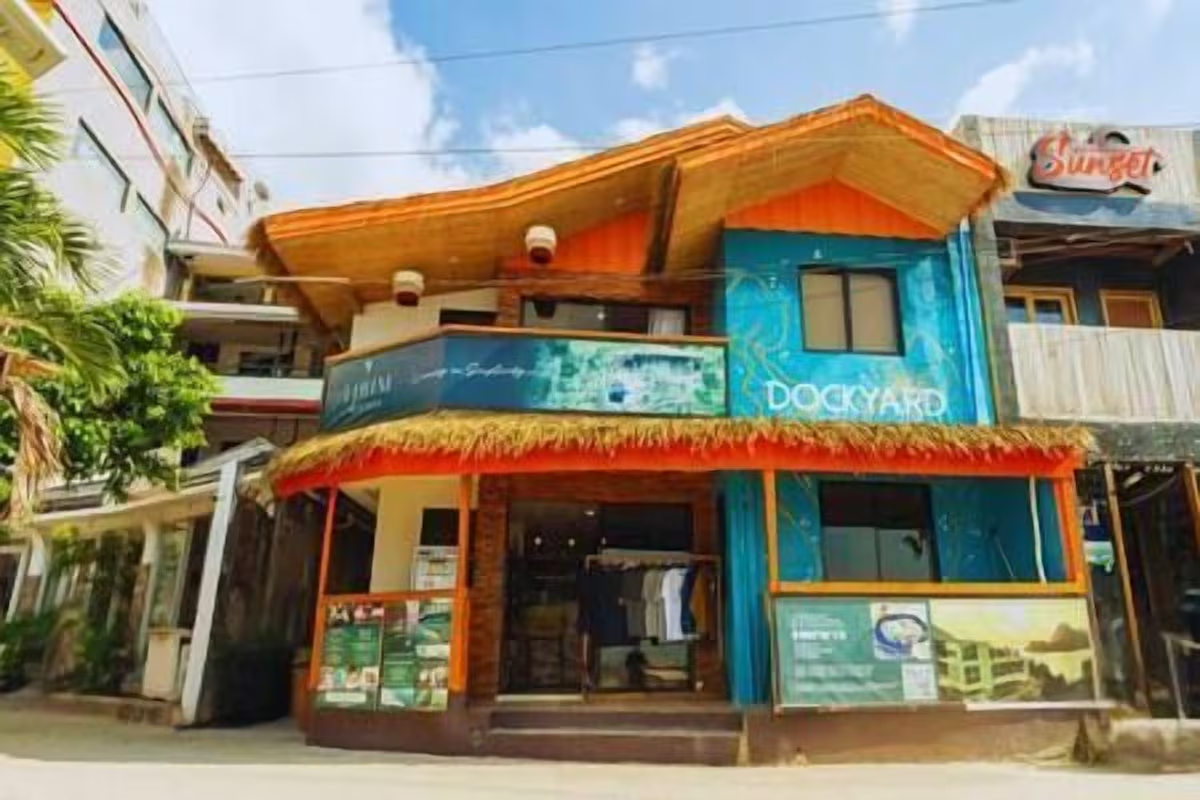
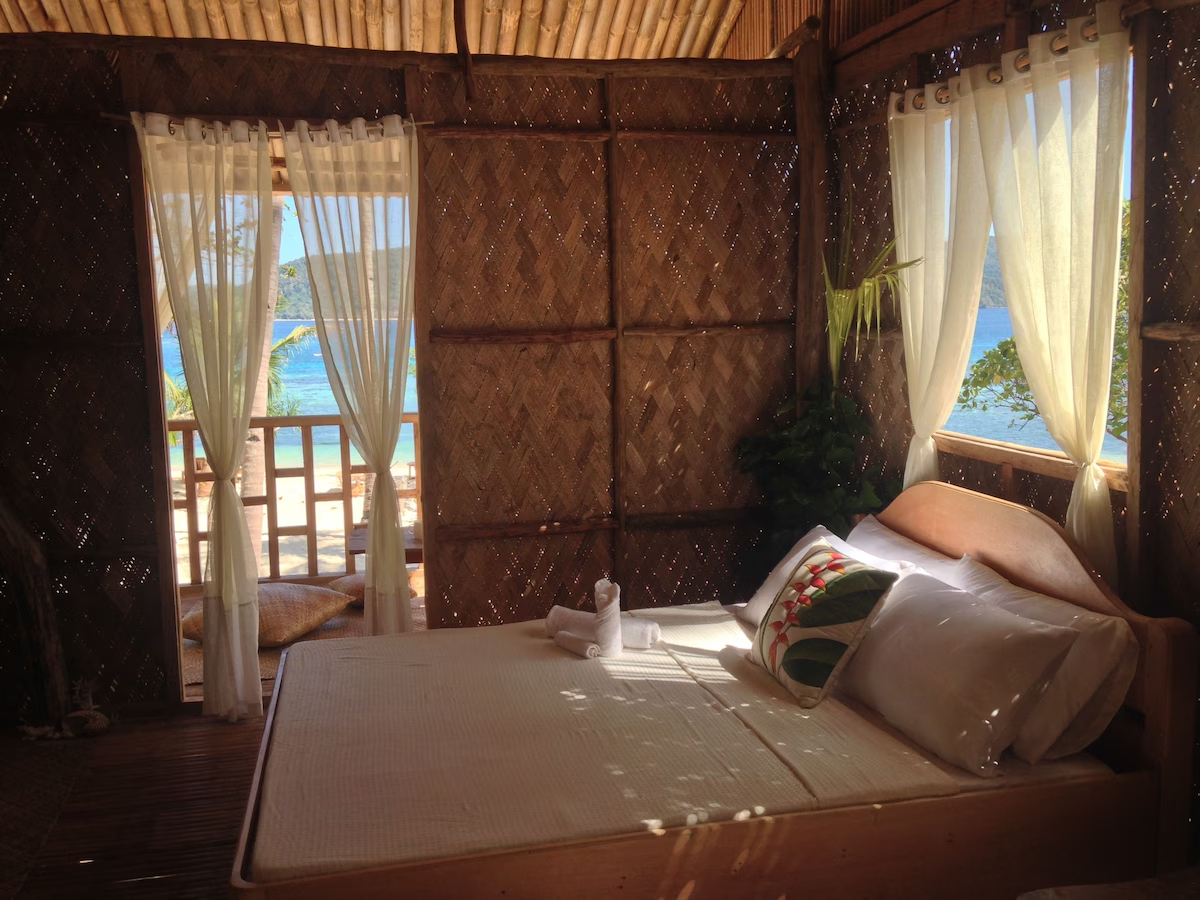
El Nido has everything from barefoot luxury resorts tucked into limestone cliffs to simple beachfront stays steps from the water. I’ve rounded up a few incredible properties below depending on your budget and travel style, whether you want something quiet and secluded or a base right in the middle of town.
Activities & Island Tours in El Nido
Island hopping is still one of the best things you can do in El Nido, especially if the weather cooperates. I’ve linked a few popular tours and activities below to make planning easier, but it’s also worth asking your hotel or property manager directly once you arrive. Many accommodations work closely with local guides, boat captains, and family-run operators, and you can sometimes get better prices booking locally instead of through larger platforms.
El Nido Tour C Private
Discover Scuba diving in El Nido
El Nido Palawan fishing with local Fisherman with lunch
Balinese purification at holy water temple
El Nido Beginner Surf Lesson with Lunch
El Nido OFF ROAD Tour
Final Thoughts
Travelling through the Philippines during monsoon season wasn’t picture-perfect.
It was humid. Unpredictable. Occasionally frustrating.
But it also felt more honest than many trips I’ve taken.
Not because hardship automatically creates depth, and not because storms are beautiful for everyone living through them, but because the experience forced me to let go of the idea that travel only counts when conditions are ideal.
Some places reveal themselves slowly once the fantasy version washes away a little.
For me, this was one of them.
Pin This for Later