The Black Pottery of Oaxaca: How the Clay Turns Black
The transformation happens in the kiln.
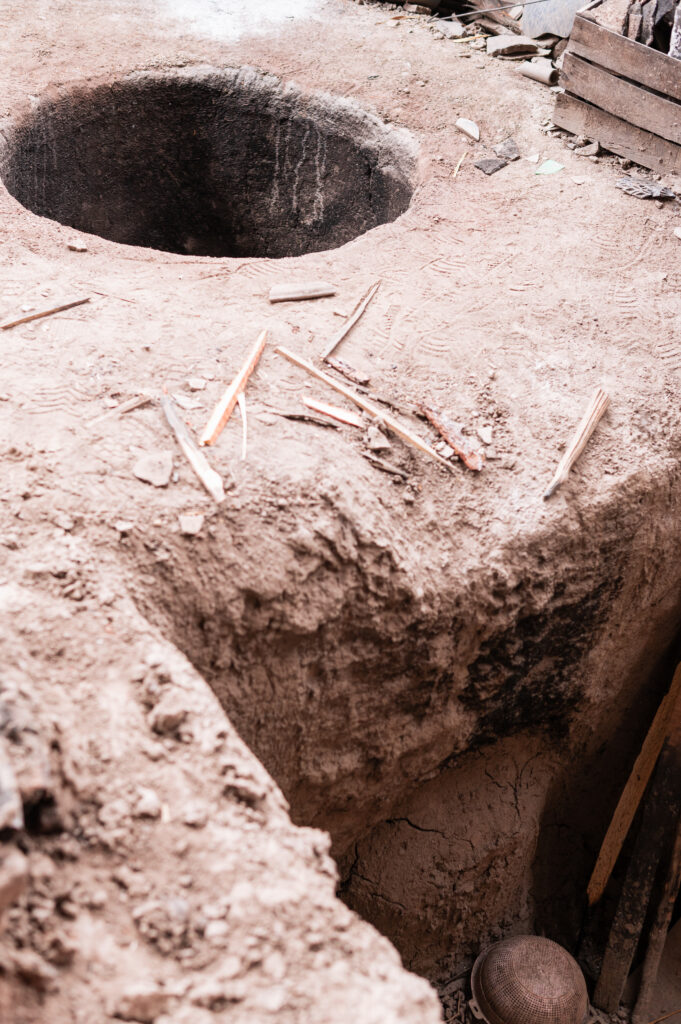
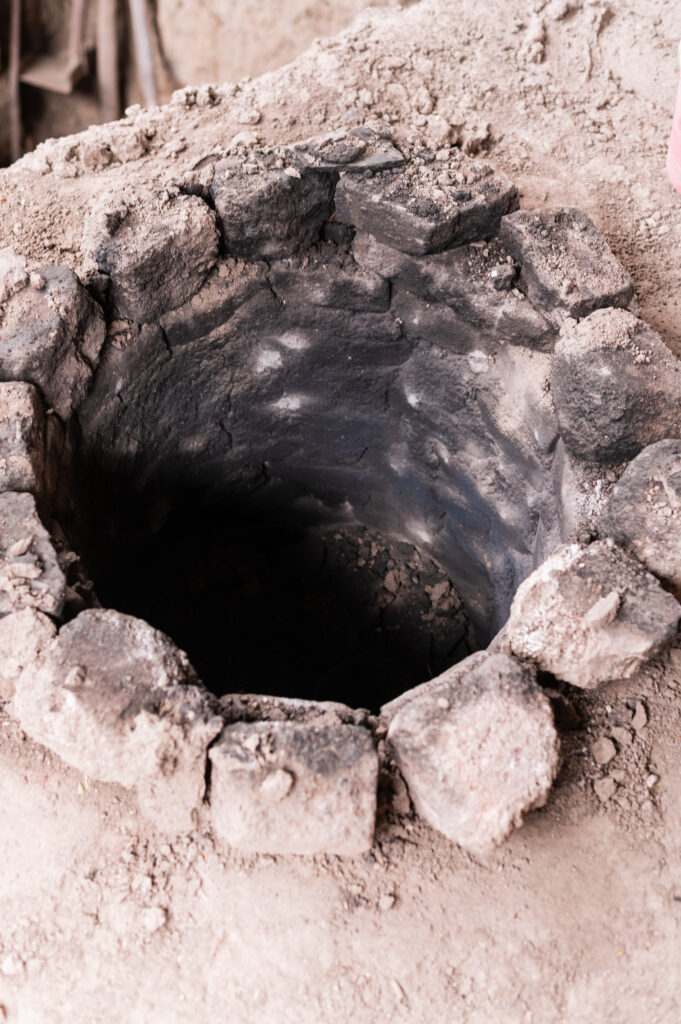
After drying for roughly two weeks on open shelves, the pottery is placed inside an underground kiln built in the family’s yard. The pieces must reach temperatures of roughly 800–900°C, hot enough to permanently harden the clay.
During firing, organic debris is burned alongside the pottery.
The resulting ash and smoke interact with the clay’s porous surface. Oxygen is restricted in the kiln, and this reduction firing process causes the clay to darken completely.
The result is striking.
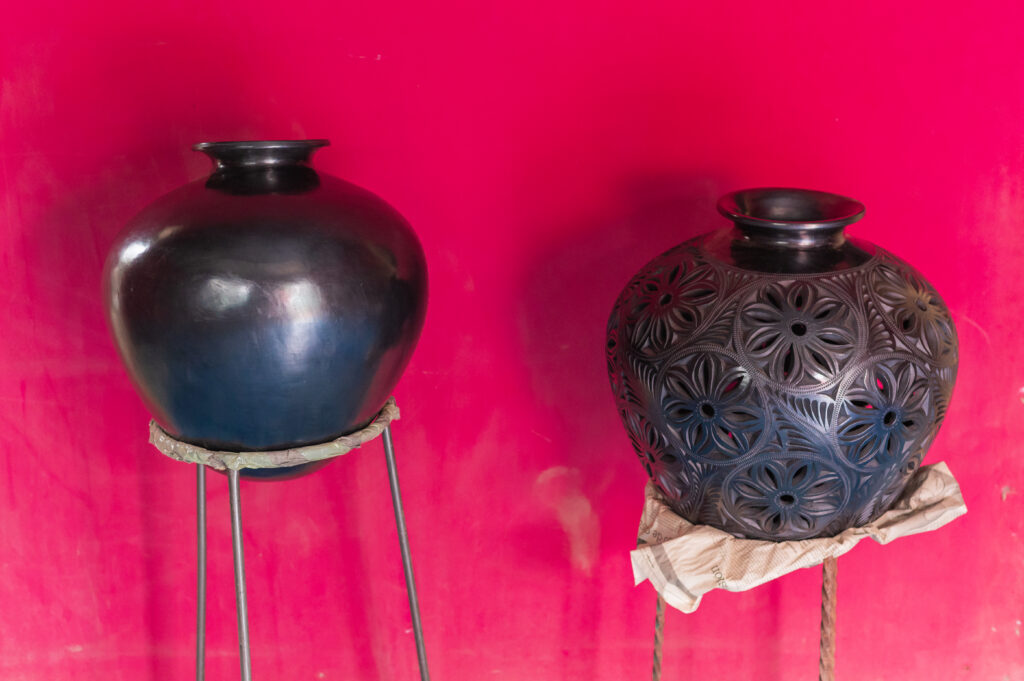
The pottery emerges black not just on the surface but all the way through. If one of these pieces were broken, the interior would be just as dark as the exterior.
It is a transformation that feels almost alchemical.
Walking Through the Showroom
After the tour, the family invited me into their showroom.
It is the kind of place that quietly tests your self-control.
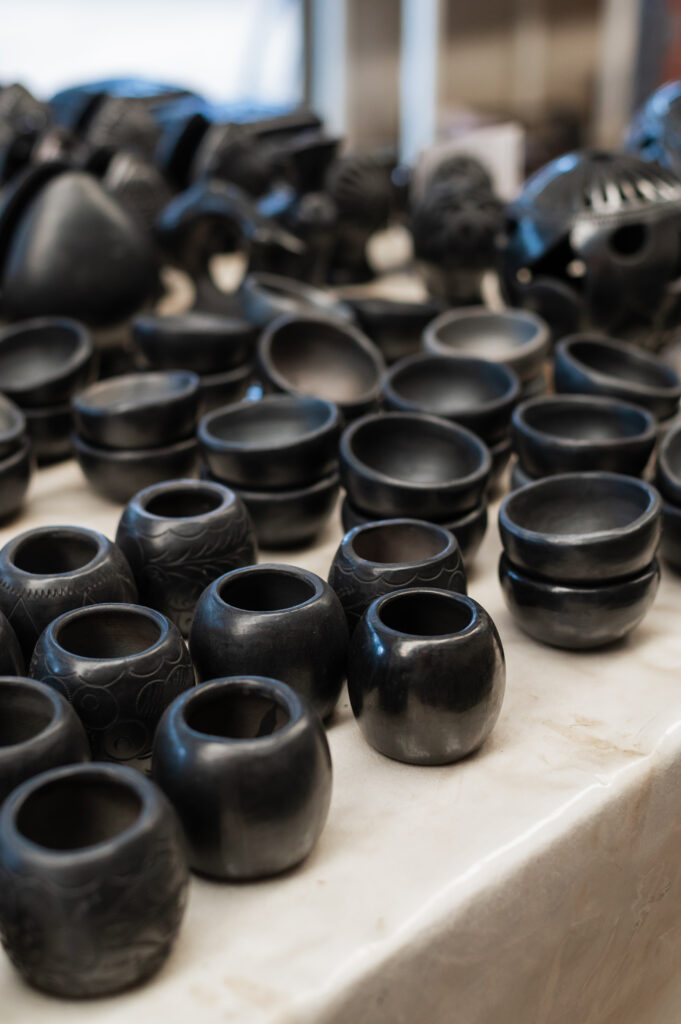
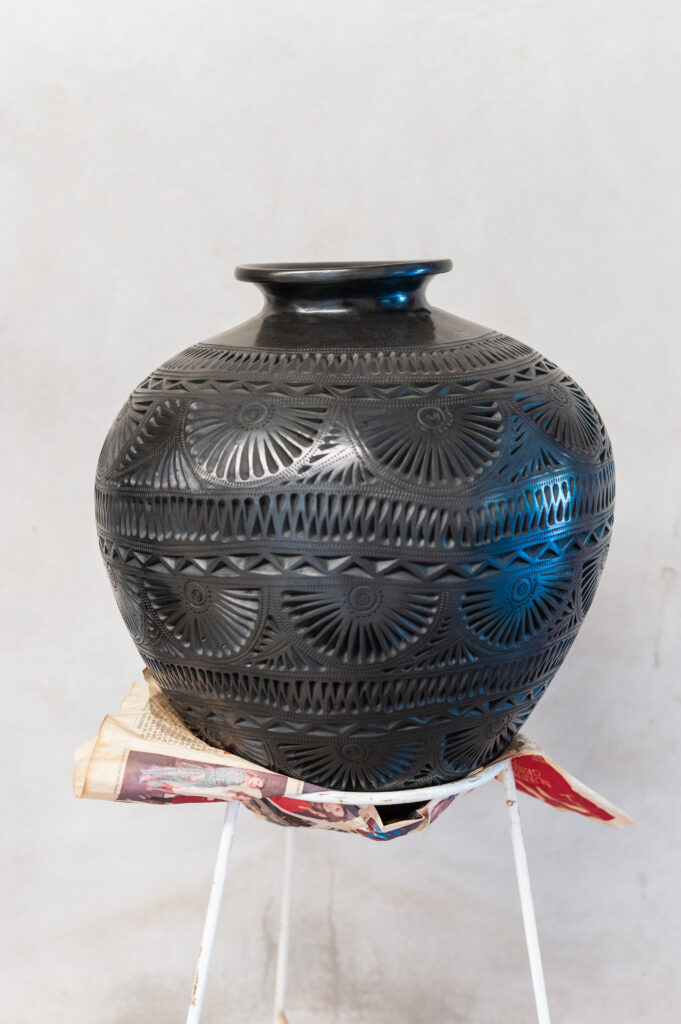
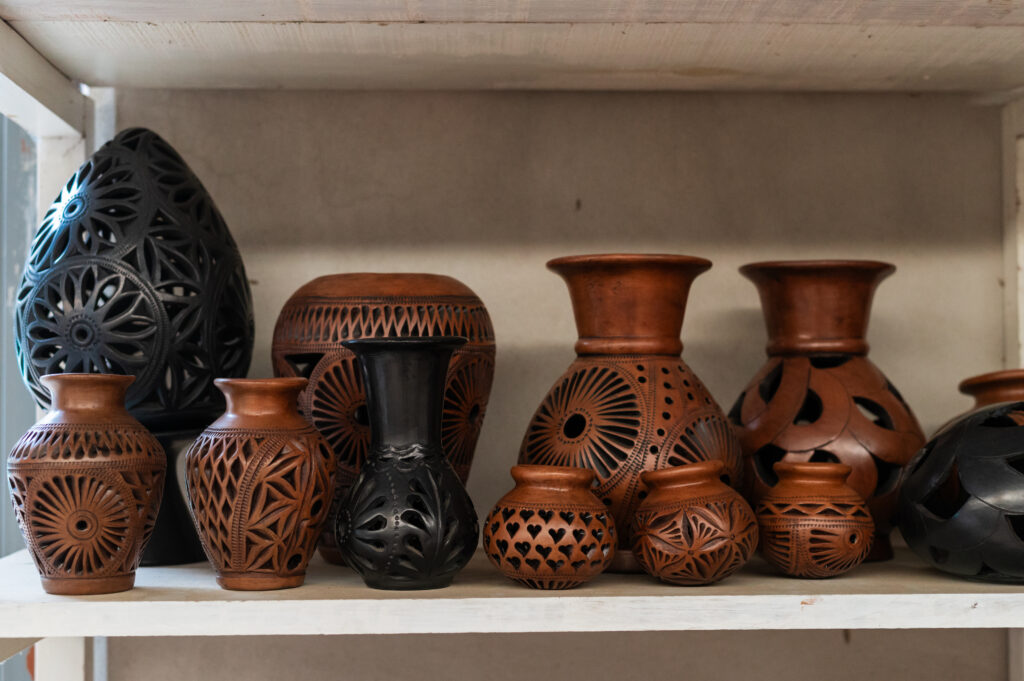
Shelves are filled with everything from delicate jewellery dishes to dramatic sculptural vases. Some pieces are smooth and minimal. Others are covered in intricate carving that catches the light in shifting patterns.
I spent far longer than expected trying to choose what to bring home.
In the end I left with two smaller pieces that could survive the journey in my luggage. Even now I suspect I should have chosen something far more dramatic. One of the large carved vases still lingers in my memory.
If I ever return, I will not make the same mistake.
In the end I left with two smaller pieces that could survive the journey in my luggage. Even now I suspect I should have chosen something far more dramatic. One of the large carved vases still lingers in my memory.
The Hands Behind the Craft
What stayed with me most was not the pottery itself.
It was the people.
The family at Taller de Barro Negro Fam Mateo Galan welcomed me with patience and generosity, showing every stage of their work without rushing a single explanation. The pride they take in this tradition is unmistakable. The black pottery of Oaxaca is here to stay and is such a unique process. The craft’s knowledge must be passed down from generation to generation; we risk losing this craftsmanship.
Their hands move with a kind of quiet confidence that only comes from years of practice.
Every piece in their workshop carries that history with it.
Why This Craft Matters
Black pottery from Oaxaca is not simply a souvenir.
It is a living tradition shaped by generations of makers who continue to refine and protect their techniques. The tools, the kiln, the clay deposits, the polishing stones. Each part of the process has been passed down through families who see themselves as caretakers of the craft.
Spending time in a workshop like this changes how you see the finished piece.
It is no longer just pottery.
It is time, skill, and patience made visible.
Want to see more?
If you enjoy travel stories that focus on the people and traditions behind a place, you might also like exploring other cultural discoveries from my travels.
Or you can browse the travel prints from this trip if you would like to bring a small piece of it home.
More stories from the road are always on the way.
