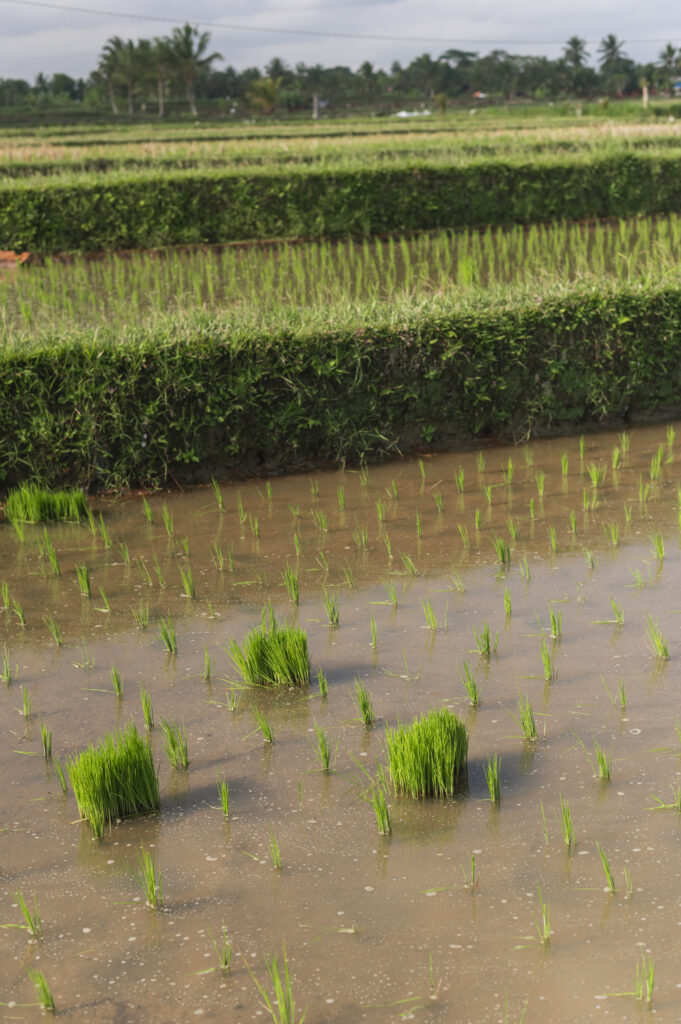
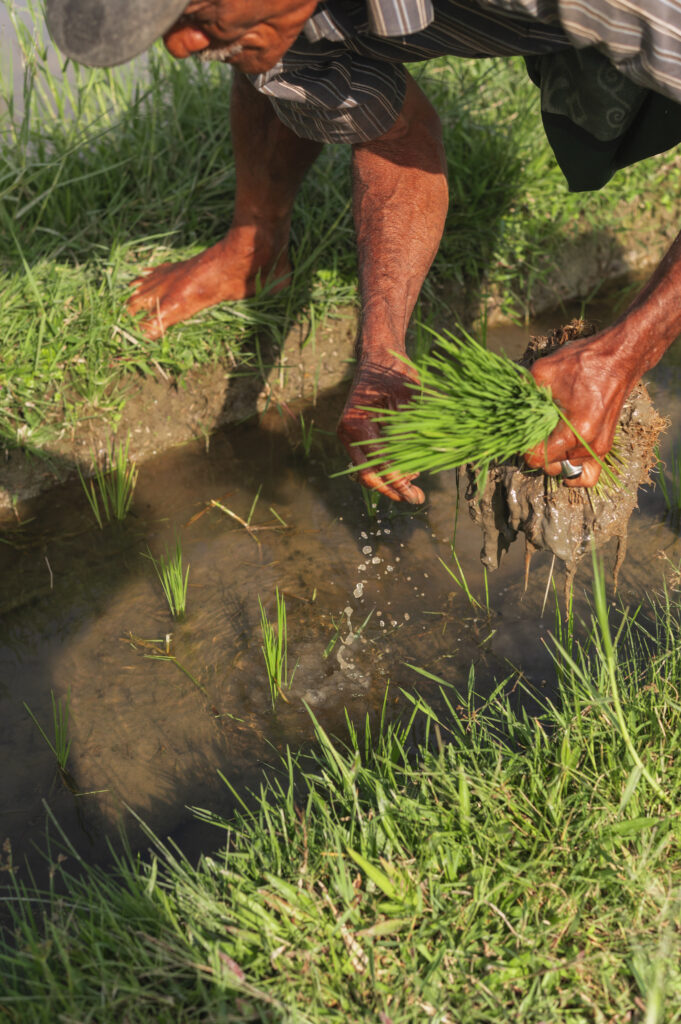
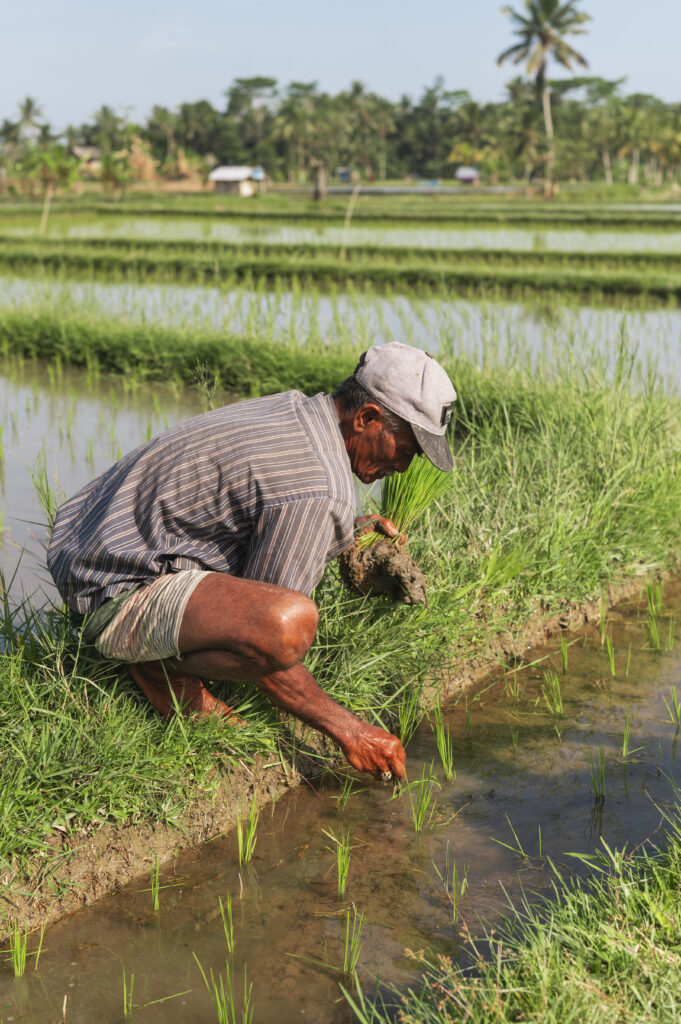
If you’re planning a trip to Bali, leave space for experiences like this.
Exploring the rice fields is often treated as something visual. A place to walk through, take a few photos, and move on from, but they’re not just a landscape.
There’s history here. Systems that have been built, shared, and maintained over generations. These fields are someone’s livelihood, not just a backdrop for a good photo.
If you can, consider experiencing them with someone who actually works the land. Not just to see the, but to understand even a small part of what goes into them.
What You See From the Road
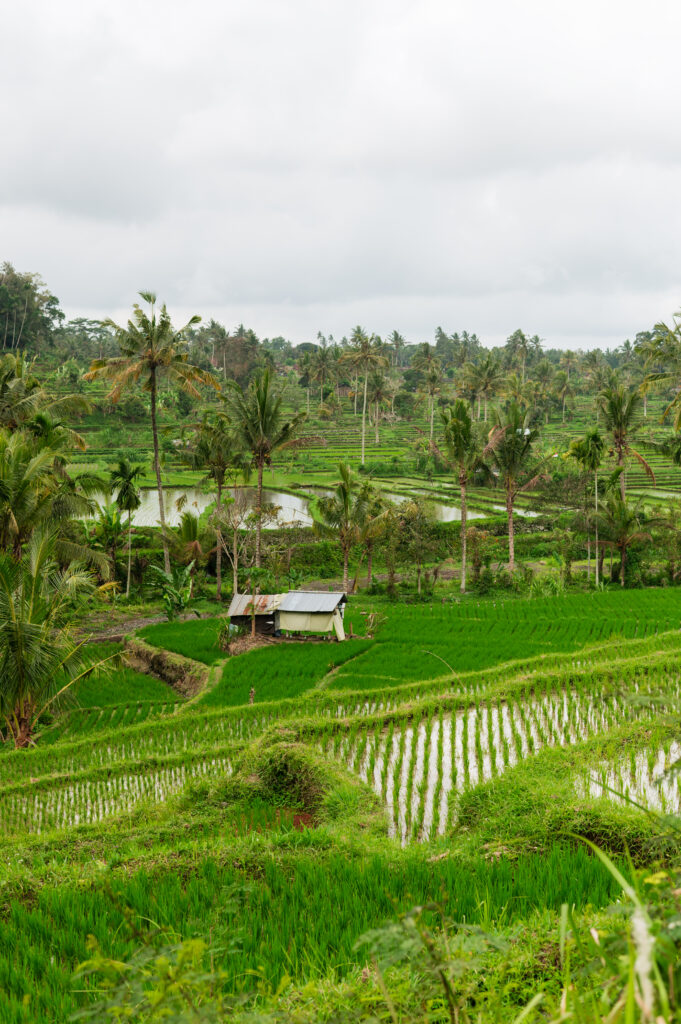
Most people don’t step into Bali’s rice fields. They stand at the edge.
They take the photo. Maybe a few. Maybe a hundred. They wait for a clear moment between people, frame it just right, and leave with something beautiful.
And it IS beautiful.
The terraces are layered perfectly. The green is unreal. The light hits in a way that makes everything feel softer than it is.
But when it comes to getting that perfect shot for insta, you don’t feel the weight of it.
You don’t feel the heat sitting on your shoulders. You don’t feel the resistance in the ground. You don’t see how much of this place depends on repetition and timing and knowing exactly where to step without thinking about it.
From the road, it looks effortless. The perfect backdrop to post to your followers.
It isn’t.
The Work Inside the Fields
Once you’re in it, the pace changes immediately.
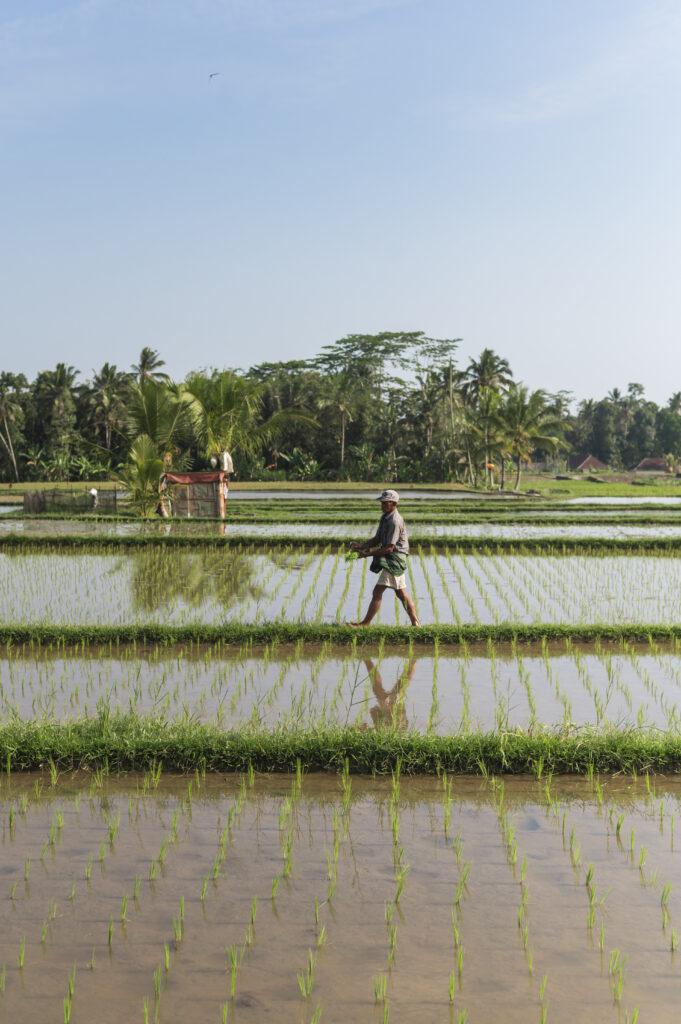
I followed the farmers through the terraces, trying to mirror what they were doing and realizing very quickly that I was nowhere near their level of balance and knowledge of the land.
Every movement had intention. Where to place your foot. How to handle the plants. How to move through the water without disturbing what didn’t need to be disturbed.
There’s a system behind it, it’s learned. Passed down. Practiced until it becomes instinct.
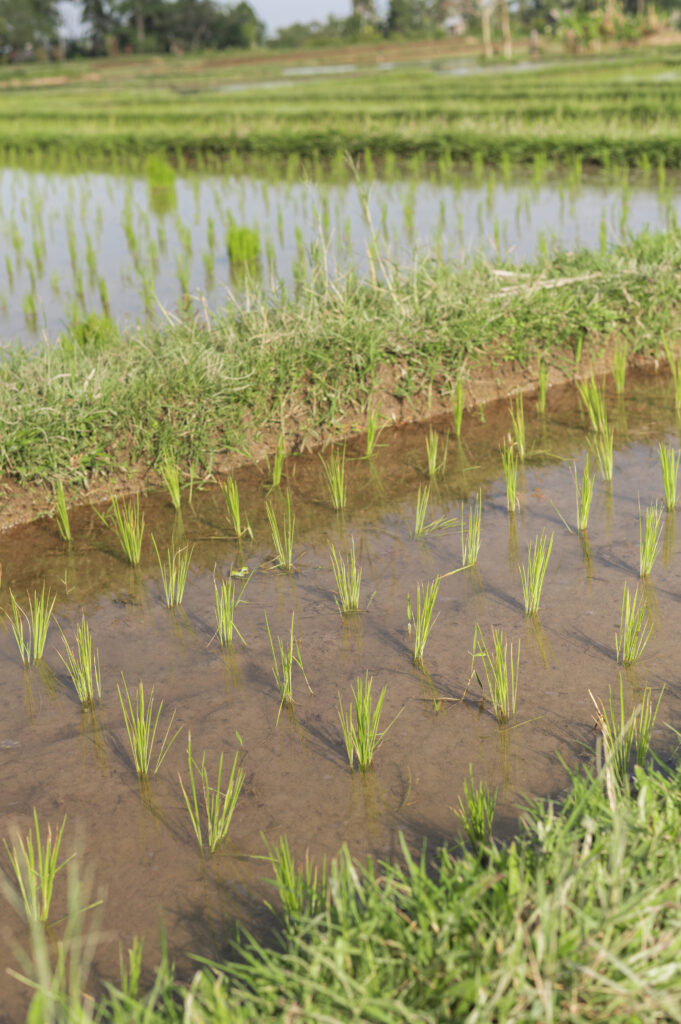
Bali’s rice terraces aren’t just arranged for beauty. They’re part of a cooperative irrigation system called subak, a centuries-old method that connects farmers, water temples, and land in a shared structure that’s as much cultural as it is agricultural.
You don’t see that in the photos.
You see it when someone explains it to you while standing in the middle of it, hands already back at work while they talk. Feet muddy and getting caught in the squelching field that was flooded for intentional growth.
What Responsible Travel Actually Looks Like in Bali’s Rice Fields
Learning the fields didn’t happen from the edge.
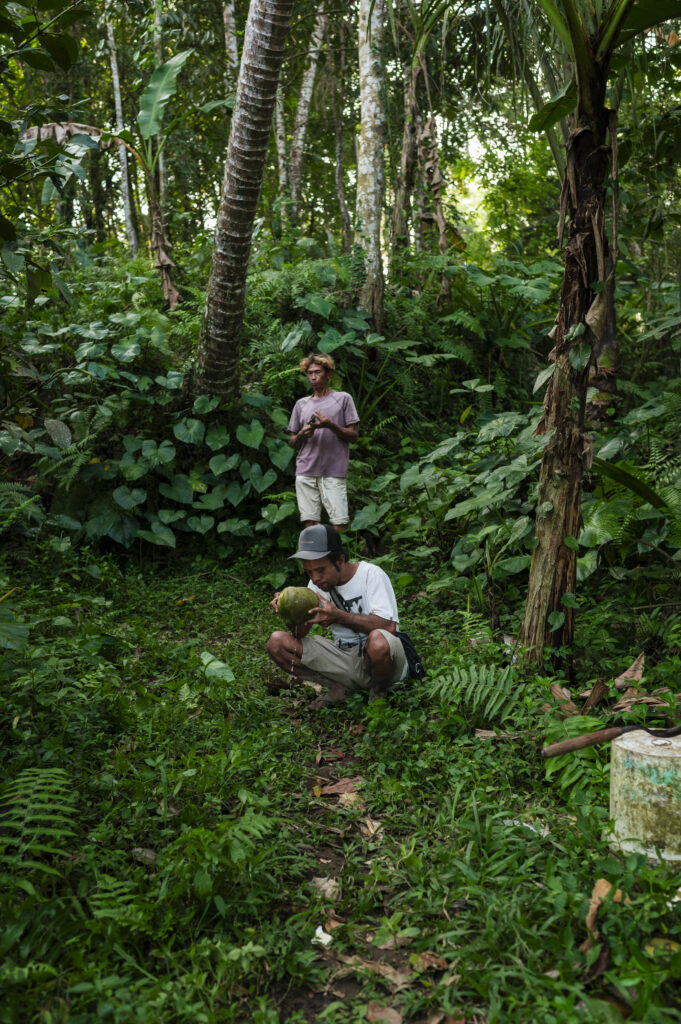
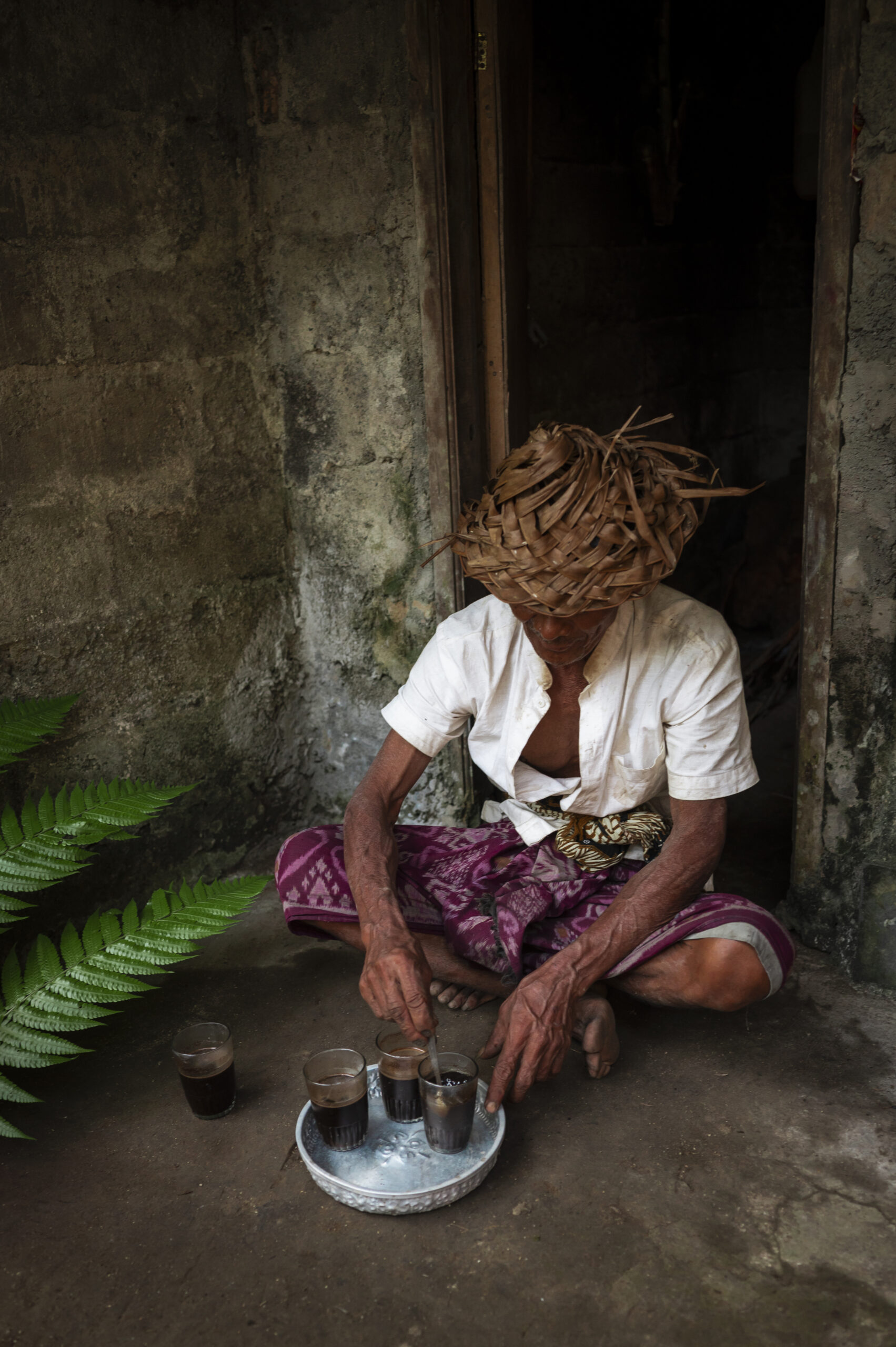
We walked through them. Through the narrow ridges, into the mud, and eventually into the surrounding rainforest with a local guide who grew up working this land.
As we moved, he talked. About his family, the farming process, and how the community works together across seasons. How water is shared. How labour is distributed. How success isn’t individual here, it’s collective.
That context changes what you’re looking at.
Because the rice fields aren’t just maintained, they’re coordinated. They’re built from generations of knowledge and tedious labour. That coordination is what keeps them functioning.
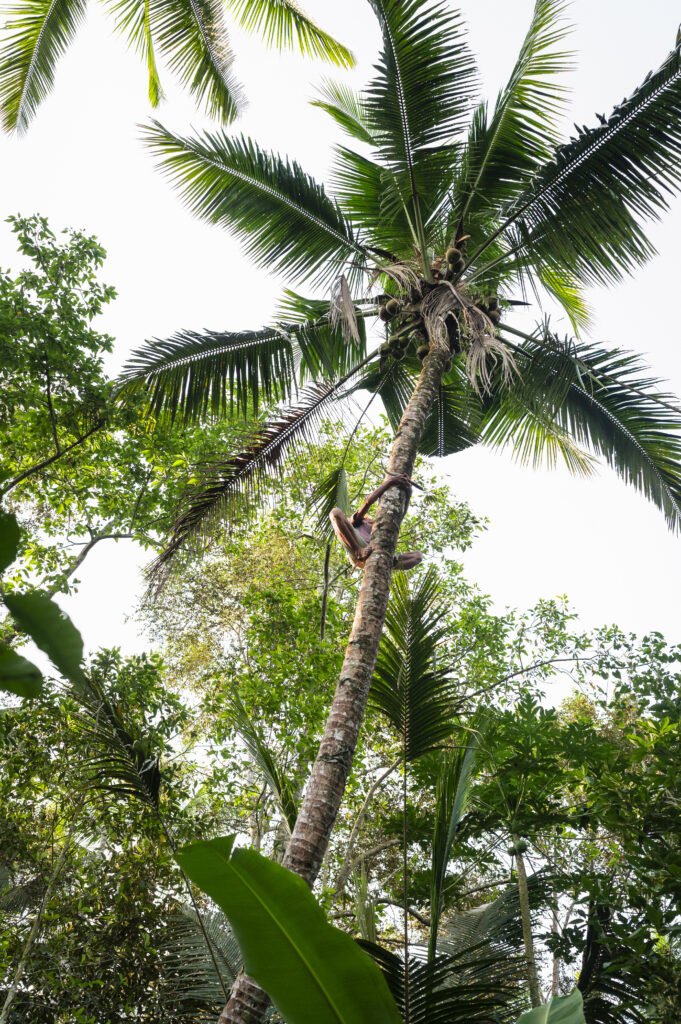
At one point, the group stopped near a palm tree that was easily 40 feet tall. One of the farmhands climbed it efficiently, like it was part of his everyday; which it was.
They brought down fresh coconuts and opened them on the spot.
We drank. They drank.
No bottled water. No waste. When given the choice, this team sticks with what’s already available to them.
They paused for a cigarette, ate the coconut meat once the water was gone, and then moved on.
Back to the fields. Back to work. Nothing about it was adjusted for us, and that’s what made it feel real.
The Version Most Visitors See (And Why It Falls Short)
It’s easy to experience Bali’s rice fields as a visual stop.
Walkways, viewpoints, swings, curated angles designed for photos. To be fair, those exist for a reason. They’re accessible, efficient, and they give people a version of the landscape quickly.
We did some of that too, but we quickly leanred it’s not the same.
When you stay at the edge, the fields read as aesthetic. But, when you step into them, even briefly, they read as infrastructure.
As something that requires ongoing, coordinated effort to exist at all. Suddenly your aesthetic view shifts into an entirely different perception.
What Sustainable Travel Actually Looks Like in Practice
It’s easy to default to the polished version of Bali. The swings. The dresses. The perfectly framed shots.
And there’s nothing inherently wrong with that, we did it too.
Those moments don’t carry the same weight, because they’re built for consumption.
What we experienced in the fields and on the farms wasn’t.
It was slower. Less comfortable. Less controlled. Hot. Muddy. Sometimes awkward.
And significantly more informative.
There’s a lot of vague language around “sustainable travel.”
This is what it looks like in practice: Spending time with people who work the land instead of just photographing it.
Understanding how resources are used and shared. Seeing how little is wasted when systems are built to sustain themselves.
Choosing experiences that prioritize local knowledge over curated convenience.
Not as a moral stance. Just as a better way to understand where you are.
If I Did This Again
I’d prioritize this version every time. Not instead of the highlights, but alongside them.
The photos might come from the viewpoints, but the understanding comes from everything underneath them.
Where to book these tours
If you’re looking to experience the fields this way, here are a few tours run with local farmers and guides. And if you have the time, reaching out directly can often lead to more experiences through their community—people tend to refer each other, and it keeps things local. These tours listed below are hosted by the best guides I have ever had.